Long before rubber becomes part of a tire, a shoe, an industrial component, or countless other products used around the world, its story usually starts with something simple. A tree.
Natural rubber has supported global manufacturing for generations. Its elasticity, durability, and versatility have made it an essential material across industries. But as the world reckons with the environmental cost of growing consumption and rising waste, the future of rubber isn’t just about how much we can produce anymore.
It’s about how wisely we use it.
At Pacific Sole Manufacturing, a subsidiary of Neyius Textiles, we believe the future of sustainable manufacturing depends on understanding the full life cycle of materials, from where they come from and how they’re produced to how they’re used, recovered, recycled, and sometimes given a second chance.
Rubber’s story offers a real opportunity to rethink that cycle.
Where Natural Rubber Begins
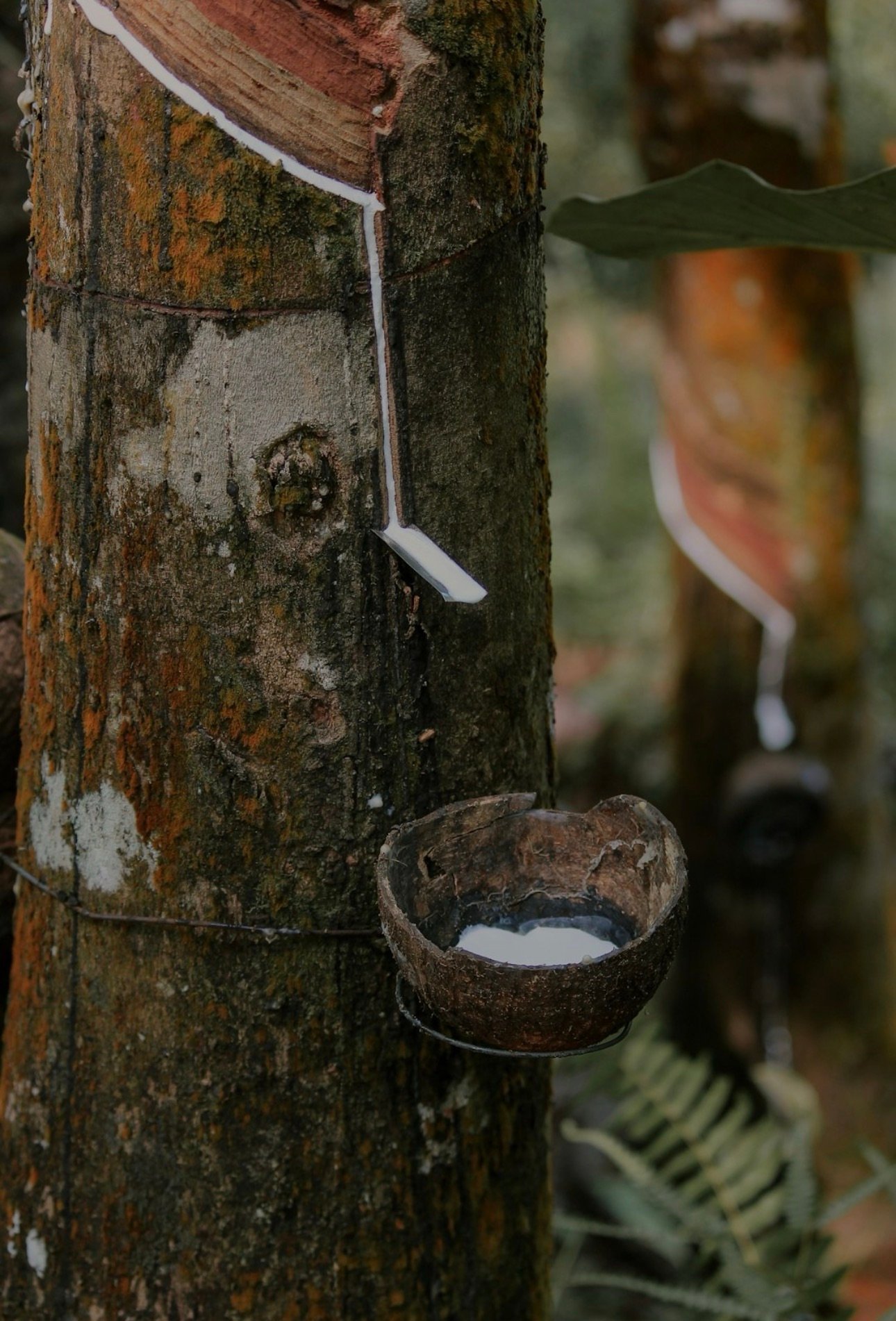
The image of latex being collected from a rubber tree is the opening scene of a much bigger industrial story.
Natural rubber comes from latex produced by rubber trees. Through careful tapping and collection, that latex gets harvested and processed into material used in products that travel across continents and serve industries throughout the global economy.
From transportation and manufacturing to footwear and consumer goods, rubber has worked its way into nearly every part of modern life.
But every natural resource comes with a responsibility attached to it.
As demand for products keeps growing worldwide, manufacturers have to think about more than where their materials come from. They also have to think about how efficiently those materials get used, and what happens to them once a product reaches the end of its first life.
For Pacific Sole Manufacturing and Neyius Textiles, that broader view is central to how we talk about sustainable manufacturing.
The Journey From Natural Rubber to Recycled Rubber
A material’s story shouldn’t necessarily end when its original product does.
Rubber may start out as a natural resource, but manufacturing turns it into products built to last for years. That durability is one of rubber’s biggest advantages. It’s also part of what makes rubber products a real challenge once they’re finally discarded.
That’s where recycled rubber starts to matter.
By recovering and processing suitable rubber materials, manufacturers and recyclers can give existing resources another useful life. Depending on the material, the application, technical requirements, and how it’s processed, recovered rubber can end up in industrial materials, surfaces, construction applications, and certain footwear components.
The concept itself is simple:
Harvest responsibly. Manufacture intelligently. Use efficiently. Recover whenever possible.
That’s the foundation of a more circular approach to manufacturing.
Why Sustainable Rubber Manufacturing Matters
The future of manufacturing can’t really be separated from the future of the planet’s resources.
Every product starts somewhere. Every material takes energy, labor, transportation, infrastructure, and expertise to produce. When a valuable material gets thrown away without any thought toward reuse, a lot of that embedded value simply disappears.
A more sustainable manufacturing system asks a different question.
What if the end of one product could become the beginning of another?
For Pacific Sole Manufacturing, sustainability is part of a much larger conversation about innovation in modern production. As a Neyius Textiles company, and on a larger scale apart of the Neyius family of companies Pacific Sole Manufacturing sits within a broader manufacturing organization where the future of materials, production, and global industry get considered together instead of in isolation.
Natural rubber and recycled rubber are two connected chapters of the same story.
One begins with the earth.
The other begins with our decision not to waste what the earth has already given us.
Recycled Rubber and the Circular Economy
Traditional manufacturing has usually followed a straight line: extract a resource, make a product, use it, and eventually throw it away.
The circular economy pushes back on that model.
Instead of treating used materials purely as waste, circular manufacturing looks for ways to keep valuable resources in productive use longer. Recycled rubber fits into this approach by opening up new applications for rubber that might otherwise end up discarded.
That doesn’t mean every piece of rubber can be turned into any new product. Material composition, safety, quality, performance, and manufacturing requirements all come into play.
But innovation starts with asking what’s actually possible.
Can this material be recovered?
Can it be processed?
Can it serve another useful purpose?
Can a product be designed with its eventual recovery in mind from the start?
Those questions are helping redefine sustainable manufacturing around the world, and they matter more every year to the future of the global rubber industry.
Pacific Sole Manufacturing and the Future of Responsible Production
At Pacific Sole Manufacturing, we think manufacturing is about more than turning raw materials into finished products. It’s about taking part in a global system that connects natural resources, workers, technology, businesses, communities, and consumers.
As part of Neyius Textiles, Pacific Sole Manufacturing understands why it matters to keep exploring how manufacturing can evolve.
That evolution takes innovation.
It takes efficiency.
It takes a willingness to question processes that have been around for a long time.
And increasingly, it takes manufacturers who look past the factory floor and consider the full journey of the materials they rely on.
The rubber collected today may become part of a product tomorrow. Years later, innovation may open the door for some of that same material to start another chapter.
That possibility sits at the heart of circular manufacturing.
The Future Begins at the Source
There’s something remarkable about seeing natural rubber at the very beginning of its journey.
A small stream of latex collected from a tree can eventually enter a vast global manufacturing system. It can cross borders, pass through factories, become part of a finished product, serve its purpose for years, and, through recycling and innovation, find a new use once that original purpose has run its course.
That’s why the future of sustainable rubber manufacturing has to consider the entire journey, not just one stage of it.
At Pacific Sole Manufacturing, a Neyius Textiles company, we believe the biggest innovations ahead may come not just from discovering new materials, but from learning to use the materials we already have more intelligently.
From the tree that produces natural rubber to the technologies giving recycled rubber new possibilities, every stage matters.
Sustainability isn’t a single destination.
It’s a cycle, and the future of manufacturing depends on how well we complete it.