

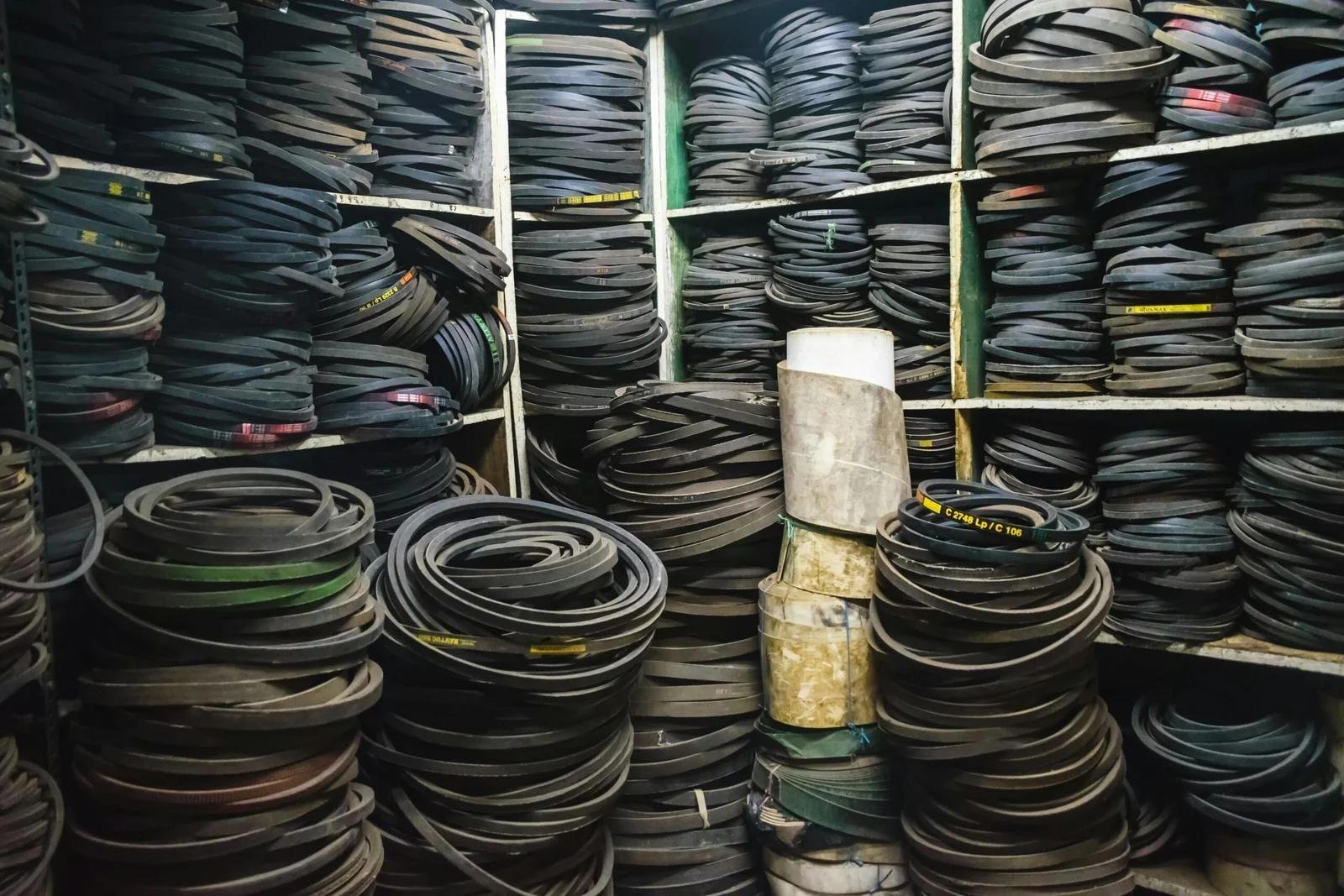
The right process for the product requirement.
Every component begins with a defined application. Material selection, geometry, tooling, process conditions and inspection requirements all influence the final result. PSM reviews these factors with customers to establish a practical manufacturing route.
Rubber mixing & compounding
Rubber compounds are developed by combining base materials and additives to achieve defined processing and performance characteristics.
| Polymers | NR, SBR, EPDM, NBR, CR |
|---|---|
| Mixing equipment | Internal mixer + two-roll mills |
| Batch capacity | Up to 75 kg per batch |
| Checks | Hardness, density, cure behaviour |
Compression molding
A molding process that uses heat and pressure to form rubber within a shaped tool.
| Press range | 100–400 t |
|---|---|
| Max. platen size | 600 × 600 mm |
| Tooling | Customer-supplied or developed with partner toolmakers |
| Typical parts | Soles, pads, gaskets, seals |
Injection molding
A process for injecting rubber into a mold cavity, suited to repeatable geometry at volume.
| Machines | Vertical rubber injection presses |
|---|---|
| Materials | NR, SBR, EPDM, NBR |
| Part weight | 5 g – 1.5 kg |
Extrusion
A process used to produce continuous rubber profiles, cut to length or supplied on coils.
| Profile size | Up to 80 mm cross-section |
|---|---|
| Downstream ops | Cut-to-length, splicing, coiling |
| Curing | Continuous and batch (autoclave) |
Material options we discuss with customers.
Final selection depends on the application, environment and required properties. Our compounding team will recommend a starting point.